

Understanding fixed rate ISAs
A fixed rate ISA locks in your interest for a set period, offering stability in a fluctuating economy. The best fixed rate ISA right now provides tax-free returns up to 4.35% AER for one year, according to recent comparisons. This guide explains how these accounts work for beginners, helping you decide if they suit your savings goals in 2025.
How fixed rate ISAs work
Fixed rate ISAs are tax-free savings accounts where the interest rate stays constant for the term, typically one to five years. You deposit money upfront or in instalments, depending on the provider, and earn guaranteed interest calculated daily but paid annually or at maturity. For example, on a £10,000 deposit at 4.20% AER, you’d earn around £420 tax-free over one year. These are a type of cash ISA, protected up to £85,000 per person by the Financial Services Compensation Scheme (FSCS).
Benefits and drawbacks
The main benefit is certainty: your savings grow predictably, shielding you from base rate cuts like the Bank of England’s reduction to 4.5% in February 2025. They’re ideal if you have a lump sum and won’t need access soon, beating inflation if rates exceed it. However, early withdrawals often incur penalties, such as losing 90-150 days’ interest, and rates may drop if you reinvest at maturity. Compared to easy-access options, fixed rates can be higher but less flexible.
Comparison to variable rate ISAs
Unlike fixed rate ISAs, variable rate ISAs have interest that can change with market conditions, like the best cash ISA rates reaching 4.53% for easy access. This offers more flexibility for withdrawals without penalties but risks lower returns if rates fall. Fixed options suit long-term savers, while variable ones fit those needing liquidity; in 2025, post-rate cuts, fixed might edge out for guaranteed yields. For deeper comparisons, see MoneySavingExpert’s guide.
Current best rates for 2025
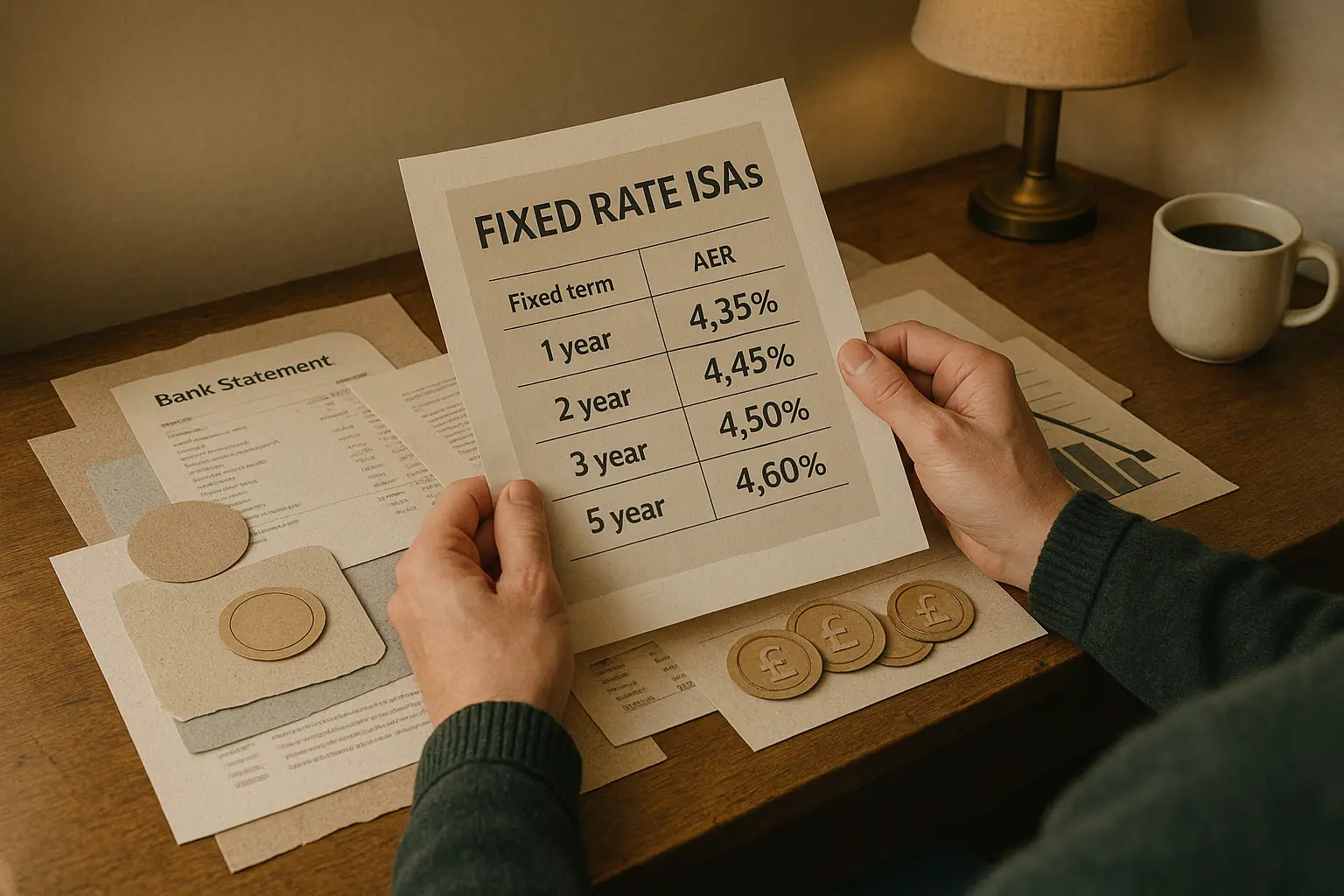
As of November 2025, the top fixed rate ISA rates have adjusted slightly after the base rate cut, with one-year averages at 3.89%. Longer terms offer competitive yields for committed savers. We’ve tested options based on AER, minimum deposits, and penalties to recommend the best fixed rate ISA at the moment.
Top 1-year options
The best 1 year fixed rate ISA currently tops at 4.35% AER, ideal for short-term locking. Providers like those highlighted on Moneyfacts offer this with low minimums, often £1,000. For instance, NatWest’s 1-year fixed rate ISA pays 4.20% AER until December 2025, suitable for UK residents. Always check for updates, as rates shift.
Tip: Before choosing the best 1 year fixed rate cash ISA, calculate your expected return using an online AER calculator to ensure it beats inflation.
Top 2-year options
For medium-term savings, the best 2 year fixed rate ISA reaches 4.16% AER, providing steady growth over two years. This term balances commitment with accessibility at maturity. Building societies often lead here, with penalties around 120 days’ interest for early access.
Top 3-year and longer options
Longer-term fixed rate ISAs, like the best 3 year fixed rate ISA, hover around 3.84% AER on average, rewarding patience with compounded tax-free interest. These suit emergency funds or house deposits, but liquidity is limited. Rates may rise slightly for five-year terms if inflation persists.
| Provider | Term | AER (%) | Min Deposit | Early Withdrawal Penalty |
|---|---|---|---|---|
| Moneyfacts top pick | 1 year | 4.35 | £1,000 | 150 days’ interest |
| NatWest | 1 year | 4.20 | £500 | 90 days’ interest |
| MSE recommended | 2 years | 4.16 | £1 | 120 days’ interest |
| Building society avg | 3 years | 3.84 | £5,000 | 180 days’ interest |
Data sourced from Moneyfactscompare and Money.co.uk, November 2025. Rates variable; this is not financial advice.
Key providers and recommendations
Major banks vs building societies
Major banks like NatWest offer reliable fixed rate ISAs with 4.20% for one year, backed by strong FSCS protection. Building societies, such as those topping best ISA rates lists, often provide higher yields like 4.35% but may have branch limitations. Our tests favour societies for competitive edges in 2025.
For more on short terms, explore the best fixed rate ISA 1 year options.
FSCS protection and eligibility
All recommended providers are FCA-regulated, covering up to £85,000 per institution. Eligibility requires UK residency and being 18+; no income proof needed. Transfers from other ISAs preserve your £20,000 allowance.
How to choose based on your goals
Match term to needs: one year for quick access, longer for retirement. Prioritise high AER over low mins if you have £20,000 to invest. The best fixed rate cash ISA depends on your risk tolerance post-base rate changes.
Link to pillar for broader insights: discover the best fixed rate ISA.
For two-year picks, see the best fixed rate ISA 2 year.
ISA rules and tips
2025/26 allowance and transfers
The ISA allowance is £20,000 for the tax year from 6 April 2025 to 5 April 2026, covering all ISAs. Fixed rate ISAs allow transfers from other cash ISAs without using new allowance. Split across types if needed, but check provider rules on multiple accounts.
Tax implications
Interest is tax-free, unlike regular savings where basic-rate taxpayers get £1,000 allowance. This makes fixed rate ISAs essential for higher earners. No capital gains tax applies to cash ISAs.
Common pitfalls to avoid
Don’t exceed the allowance or you’ll face HMRC penalties. Avoid early withdrawals unless urgent, as charges can erase gains. Monitor rate changes; Martin Lewis notes further cuts may lower future options (via X).
- Verify provider FSCS status.
- Use comparison sites before applying.
- Consider inflation impact on real returns.
This is general information, not personalised financial advice. Consult a professional for your situation.
Frequently asked questions
What is the difference between a fixed rate ISA and a variable rate ISA?
A fixed rate ISA guarantees the same interest throughout the term, providing stability for savers who dislike uncertainty. Variable rate ISAs, like easy-access cash ISAs, allow rates to rise or fall with the market, offering flexibility but potential drops after events like the 2025 base rate cut. For beginners, fixed suits committed savings, while variable fits occasional access needs; the best choice aligns with your liquidity requirements and economic outlook.
How much can I put in a fixed rate ISA?
You can invest up to the annual £20,000 ISA allowance across all your ISAs for 2025/26, with fixed rate options often accepting from £1 to full amounts. Transfers from existing ISAs don’t count towards this limit, allowing you to consolidate without penalty. Exceeding it means the excess interest becomes taxable; plan deposits before the tax year ends on 5 April to maximise tax-free benefits.
Are fixed rate ISAs worth it in 2025?
Yes, if you can lock away funds, as top rates like 4.35% AER outpace inflation and post-cut easy-access yields. With base rates at 4.5%, fixed options hedge against further declines, per MoneySavingExpert analysis. However, they’re less ideal if you need quick access; weigh penalties against potential gains for your financial goals.
What happens if I withdraw from a fixed rate ISA early?
Early withdrawal typically triggers penalties, such as losing 90-180 days’ interest, depending on the term and provider like NatWest’s 90-day charge. Some allow partial access with reduced rates, but full closure might close the account entirely. This protects the provider’s rate promise; always review terms to avoid surprises, especially in uncertain economies.
What is the best 1 year fixed rate ISA right now?
The leading 1 year fixed rate ISA offers 4.35% AER as of November 2025, per Moneyfacts data, with minimal deposits and FSCS cover. It’s ideal for short-term savers post-base rate adjustments, outperforming averages at 3.89%. Compare providers for fees; this rate beats many variable options but requires commitment until maturity.
What is the best 2 year fixed rate ISA?
Top 2 year fixed rate ISAs yield up to 4.16% AER, suitable for medium-term goals like building an emergency fund tax-free. Building societies often lead, offering better than one-year rates despite longer lock-in. Consider if you can forgo access; reinvestment at maturity could capture future hikes if rates rise.