Best Sage Coffee Machine: Which Model Should You Buy?
- Nyheter
Compare the best Sage coffee machines, from Bambino to Oracle Jet, with UK price examples, key differences, ratings and cleaning advice.

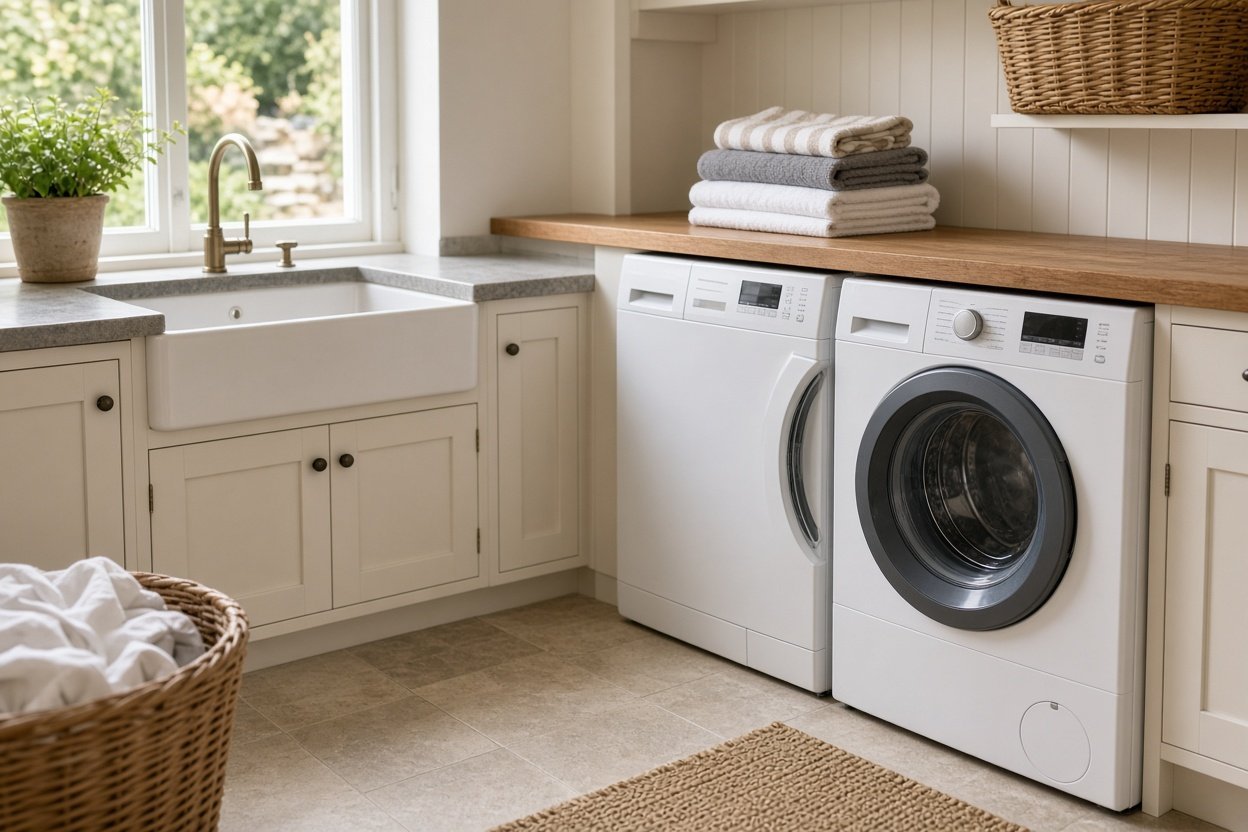

For most UK homes, a heat pump tumble dryer is the best all-round choice when running costs matter. It normally uses less than half as much energy as a vented or conventional condenser tumble dryer. The disadvantages are a higher purchase price in many cases and longer drying times, because heat pump machines work at lower temperatures. Which?’s tumble dryer buying advice identifies the same basic trade-off.
A condenser tumble dryer can be the better choice when you need flexible positioning and want to spend less initially. It collects water in a tank or sends it to a drain, so it does not need an external ventilation opening. A vented tumble dryer can suit a home that already has a practical route for an exhaust hose through an outside wall or window.
The right tumble dryer depends on energy use, installation, capacity and purchase price. The models below show how those choices look in the UK market.
This table compares priced UK models by technology and drum capacity. It includes heat pump, condenser and vented tumble dryers, as well as 8 kg, 9 kg and 10 kg machines and a compact 3 kg model. Prices were checked on 8 September 2026 and can change after that date.
| Model | Type and capacity | Price checked |
|---|---|---|
| Bush TDTE110HP | Heat pump, 10 kg | £349 at Argos |
| Candy Smart CSEH8A2LE | Heat pump, 8 kg | £279 at AO |
| Bosch Series 4 WTH85226GB | Heat pump, 8 kg | £549 at AO |
| Bosch Series 6 WQG24502GB | Heat pump, 9 kg | £699 at AO |
| Beko DTBC10001W | Condenser, 10 kg | £299 at Currys |
| Candy Smart CSEC9DF | Condenser, 9 kg | £249 at AO |
| Hotpoint C HD C92 WWGD UK | Condenser, 9 kg | £299 at AO |
| Beko DTKCE80021W | Condenser, 8 kg | £249 at Argos |
| Candy CSE V9DF80 | Vented, 9 kg | £259 at Argos |
| Bush TD3CNBW | Vented, 3 kg | £179 at Argos |
The lowest priced model in this comparison is the 3 kg Bush vented dryer at £179. The lowest priced heat pump option is the 8 kg Candy at £279, while the lowest priced condenser option is the 9 kg Candy at £249. The 10 kg Bush heat pump dryer costs £349, putting a large-capacity heat pump model close to the price of several smaller or conventional machines.
A heat pump tumble dryer recycles warm air in a closed system. Moisture is separated from the air in an evaporator and is collected in a tank or carried away through a hose. This is how a heat pump dryer works without continually heating a fresh supply of air.
Which? says heat pump tumble dryers normally use less than half as much energy as vented or conventional condenser dryers. Its reported average annual running costs are about £54 for a heat pump model, compared with about £139 for a condenser model and £140 for a vented model, based on three cotton loads each week.
The lower energy use is the main reason to choose this type. The purchase price can be higher, and drying can take longer at the lower operating temperature. The table includes the 8 kg Candy Smart CSEH8A2LE at £279, the 10 kg Bush TDTE110HP at £349, and Bosch Series 4 and Series 6 models at £549 and £699 respectively.
If you are considering a best heat pump tumble dryer or a Bosch heat pump tumble dryer, compare capacity and budget alongside the technology. The Bosch examples provide 8 kg and 9 kg capacities, while the Bush model provides 10 kg at a lower listed price than either Bosch model.
A condenser tumble dryer turns moisture into water and stores it in a container or sends it away through a drain hose. It therefore does not require an external ventilation opening. This makes a condenser tumble dryer easier to position than a vented machine in a room without a suitable outlet.
Conventional condenser machines can have a lower purchase price than heat pump models, but their energy use is higher. Which? says none of the condenser dryers it has tested have become Best Buys because of their energy consumption, and its guide says prices start at about £220.
Current examples cover several useful capacities. The Candy Smart CSEC9DF is a 9 kg condenser dryer listed at £249 by AO, while the Beko DTBC10001W offers 10 kg for £299 at Currys. The Beko DTKCE80021W provides 8 kg at £249 through Argos, and the Hotpoint C HD C92 WWGD UK provides 9 kg at £299 through AO.
Choose this type when a separate exhaust route is not available and the initial price matters more than achieving the lowest ongoing energy use. Condenser and heat pump dryers should be placed in a heated, ventilated space and normally need at least 5°C to work correctly.
A vented tumble dryer sends warm, damp air outside through a hose. It needs to be near an outside wall or window, so it offers less installation flexibility than a condenser or heat pump dryer. A suitable exhaust route is the key practical requirement for a vented tumble dryer in the UK.
The attraction is the relatively low purchase price. The listed examples range from the 3 kg Bush TD3CNBW at £179 to the 9 kg Candy CSE V9DF80 at £259. Argos also lists the 9 kg Hoover HLE V9DG 80 at £279. These models cover both compact loads and 9 kg machines.
A vented model can be reasonable when the installation is already prepared and the dryer is used occasionally. It is less attractive when the machine will run frequently, because vented dryers normally use substantially more energy than heat pump models.
Small condenser tumble dryers are less prominent in the priced examples than larger 8 kg and 9 kg machines. The smallest condenser capacity shown here is 8 kg, represented by the Beko DTKCE80021W at £249. That is substantially larger than the 3 kg Bush TD3CNBW, but the Bush is a vented rather than condenser model.
Argos also lists HOMCOM 4 kg vented tumble dryers from £134.99 to £169.99. These provide a compact, lower-cost route for smaller loads, but they require the same external exhaust arrangement as other vented dryers. A compact drum can suit limited laundry volumes; a larger drum is more useful when several loads, bedding or towels need to be dried together.
The cheapest priced examples in this comparison are compact vented machines. The HOMCOM 4 kg models listed by Argos start at £134.99, while the Bush 3 kg vented dryer is £179. The cheapest condenser example here is the 9 kg Candy at £249, and the cheapest heat pump example is the 8 kg Candy at £279.
That price difference illustrates the central buying decision. A vented or conventional condenser dryer can reduce the upfront spend, while a heat pump dryer normally reduces energy use over time. Which? reports substantially lower average annual running costs for heat pump models.
For shoppers looking for a condenser tumble dryer sale, compare the capacity as well as the reduction from the previous price. The Beko DTBC10001W is listed by Currys at £299, previously £349. AO lists the same model at £329. The listed price depends on the retailer and offer, so the model and capacity should be considered together.
A 10 kg tumble dryer provides useful capacity for large loads. The priced 10 kg options include the Bush TDTE110HP heat pump at £349, the Beko DTBC10001W condenser at £299 at Currys or £329 at AO, and the Hoover H-Dry 350 HRE C10TBER-8 condenser at £319 at Currys.
Capacity should match the loads you usually wash. A 10 kg dryer may be suitable for a household regularly drying large loads, but an 8 kg or 9 kg machine can be more appropriate when loads are smaller. The 8 kg Candy heat pump at £279 and the 9 kg Candy condenser at £249 show how choosing a different capacity can affect the purchase price.
Less efficient vented, gas-fired and conventional condenser tumble dryers are being affected by new ecodesign requirements intended to reduce energy use, emissions and household running costs. The rules favour heat pump technology, which recycles warm air in a closed system.
In Great Britain, the UK Government has set out new rules with a transition period. The government says existing UK arrangements continue during that transition. The EU’s equivalent rules began to apply on 1 July 2025, while CE-marked products follow EU requirements on the EU and Northern Ireland markets. This is why the position differs between Great Britain and Northern Ireland, and why older types can still appear in UK retailer listings during the changeover.
The basic tumble dryer symbol is a square with a circle inside. It means that the garment can be tumble dried. A crossed-out version means that the garment should not be tumble dried.
Dots inside the circle indicate temperature. One dot means low temperature, two dots mean normal temperature and three dots mean high temperature. A line beneath the symbol indicates a gentler programme; two lines indicate an extra-gentle programme. The Bosch guide to tumble dryer symbols explains these settings for UK laundry labels.
Read the care label before choosing a programme. A sensor-drying setting can stop when the selected dryness level is reached instead of continuing for a fixed time. MoneySavingExpert recommends sensor drying over long timed programmes to avoid unnecessary over-drying.
A 2.5 kW tumble dryer running at full power for two hours costs about £1.31 at an electricity rate of 26.11p per kWh. This is a calculation example based on the machine drawing its full rated power throughout the two hours.
Heat pump tumble dryers normally consume considerably less energy than vented and conventional condenser models. MoneySavingExpert says a tumble dryer can cost up to £1 per load depending on the appliance, use and electricity price. Martin Lewis and MoneySavingExpert describe the tumble dryer as one of the most energy-hungry household appliances and recommend air-drying when possible.
For most households, a heat pump tumble dryer is the strongest long-term choice because its energy use is lower. For a lower upfront price, conventional condenser and vented machines remain options, but each has a clear compromise: higher energy use for the condenser and an external exhaust requirement for the vented model.
For most households, a heat pump tumble dryer is the best type when energy use and long-term running costs are important. Which? reports average annual costs of about £54 for heat pump dryers, compared with about £139 for condenser dryers and £140 for vented dryers, based on three cotton loads per week. Heat pump models can cost more to buy and often dry more slowly. A condenser model is more flexible to install, while a vented model can be suitable where an outside exhaust route already exists.
New ecodesign requirements are intended to reduce energy use, emissions and running costs by moving the market away from less efficient vented, gas-fired and conventional condenser dryers. Heat pump dryers are favoured because they recycle warm air in a closed system. EU rules began applying on 1 July 2025; Great Britain has its own rules and transition period, while CE-marked products follow EU requirements in Northern Ireland.
Martin Lewis and MoneySavingExpert describe tumble dryers as among the most energy-hungry household appliances and recommend air-drying when possible. If a dryer is needed, MoneySavingExpert recommends sensor drying rather than a long timed programme. It also says a tumble dryer can cost up to £1 per load, depending on the appliance, use and electricity price.
A 2.5 kW dryer running continuously at full power for two hours costs about £1.31 at 26.11p per kWh. The actual cost depends on the machine and programme. Heat pump dryers normally use considerably less energy than vented and conventional condenser models, so their cost for a two-hour cycle can be lower.