
What is an easy access savings account?
An easy access savings account allows you to deposit and withdraw money whenever you need it, without facing penalties or notice periods. This flexibility makes it ideal for those who want quick access to their funds while still earning interest. Unlike more restrictive options, these accounts let you manage your savings on your terms, often through online banking for added convenience.
Definition and basics
At its core, an easy access savings account is a type of savings product offered by UK banks and building societies where you can add or remove money freely. Interest is typically calculated daily or monthly and paid out periodically, helping your savings grow steadily. These accounts are protected by the Financial Services Compensation Scheme (FSCS), which safeguards up to £85,000 per person if the provider fails, as noted by Moneyfacts in 2025.
How it differs from fixed-rate accounts
Fixed-rate savings accounts lock your money for a set period in exchange for a guaranteed interest rate, but early withdrawals often incur hefty penalties. In contrast, an easy access savings account offers variable rates that can fluctuate with the market, providing liquidity without commitment. This makes easy access options better for short-term needs, while fixed rates suit those planning to save undisturbed.
Key advantages for liquidity
The main draw of an easy access savings account is its unlimited withdrawals, ensuring you can access funds for emergencies or opportunities. This liquidity supports financial planning without the stress of locked savings. For UK savers, it’s a practical choice for building an emergency fund, allowing you to respond to life’s unpredictabilities swiftly.
Key features of easy access savings accounts
Easy access savings accounts come with straightforward features designed for user-friendly saving. They prioritise flexibility and competitive returns, with variations depending on the provider. Understanding these elements helps you select an account that aligns with your goals.
Interest calculation (AER vs gross)
Interest on an easy access savings account is quoted as AER (Annual Equivalent Rate), which shows the effective yearly return including compounding. Gross interest is the rate before tax, while AER accounts for how often interest is added—daily, monthly, or annually. For example, easy access savings account monthly interest might credit earnings at the end of each month, boosting growth through compounding, as explained on MoneySavingExpert.
Withdrawal flexibility
Most easy access savings accounts permit unlimited withdrawals without notice or fees, though some may limit to a certain number per day. This feature ensures your money remains liquid, perfect for unexpected expenses. Always check terms, as rare restrictions could apply to maintain the account’s easy access nature.
Minimum balance requirements
Many providers set a low or no minimum deposit for easy access savings accounts, starting from £1 or even £0. However, to earn the headline rate, you might need to meet a balance threshold, such as £5,000. This keeps the accounts accessible for beginners building their savings.
Online vs branch access
Online easy access savings accounts, like those from digital banks such as Chase UK, offer higher rates and app-based management for tech-savvy users. Branch-based options from high street names like Santander or Halifax provide in-person support but often lower yields. Choosing depends on your preference for digital convenience or traditional service.
Top benefits and who they suit
The benefits of an easy access savings account extend beyond basic saving, offering security and growth potential. They appeal to a wide audience, particularly those valuing accessibility over high-risk investments.
Earning competitive rates
With top easy access savings accounts offering up to 4.75% AER as of October 2025, you can outpace inflation better than standard accounts averaging 3.2%, according to Tembo. High interest easy access savings accounts maximise returns without commitment, ideal for growing modest pots efficiently.
Tax considerations and allowances
Interest earned may be taxable, but the Personal Savings Allowance (PSA) lets basic-rate taxpayers keep £1,000 tax-free annually, per HMRC guidelines. Higher earners get £500, while additional-rate pay £0. For tax-free saving, consider pairing with a Cash ISA; do you pay tax on easy access savings account interest beyond your allowance? Yes, but the PSA minimises impact for most.
Protection and safety (FSCS)
All UK-regulated easy access savings accounts are FSCS protected up to £85,000, ensuring your money is safe even if the bank collapses. This government-backed scheme adds peace of mind, making these accounts as secure as current accounts.
Suitability for emergency funds or short-term savings
These accounts suit anyone needing readily available funds, like for emergency pots or short-term goals such as holidays. They’re not for long-term retirement due to variable rates but excel for liquidity-focused savers aged 25-55.
Tip: Aim to keep 3-6 months’ expenses in an easy access savings account for emergencies. Review rates quarterly to ensure you’re getting the best easy access savings account rates.
How to compare and choose the right account
To pick the best easy access savings account, evaluate rates, fees, and fit against your needs. Use comparison sites for up-to-date insights without bias.
Factors to evaluate (rates, fees, providers)
Prioritise AER, but check for introductory bonuses that drop after months—common in online easy access savings accounts. Look for no fees and FSCS cover; providers like Saga or Post Office cater to specific demographics. For the best easy access savings, compare via tools on Money.co.uk.
Joint and business variants
An easy access joint savings account allows couples to save together, doubling FSCS protection to £170,000. Easy access business savings accounts offer similar flexibility for small firms but with higher minimums. These variants suit shared or professional saving without losing accessibility.
Current top rates for 2025
As of 2025, top rates hit 4.75% AER from providers like Zopa, which requires a linked current account (This is Money). Average rates lag at 3.2%, so shop for the highest interest easy access savings account. For detailed best easy access savings account options, explore current offers.
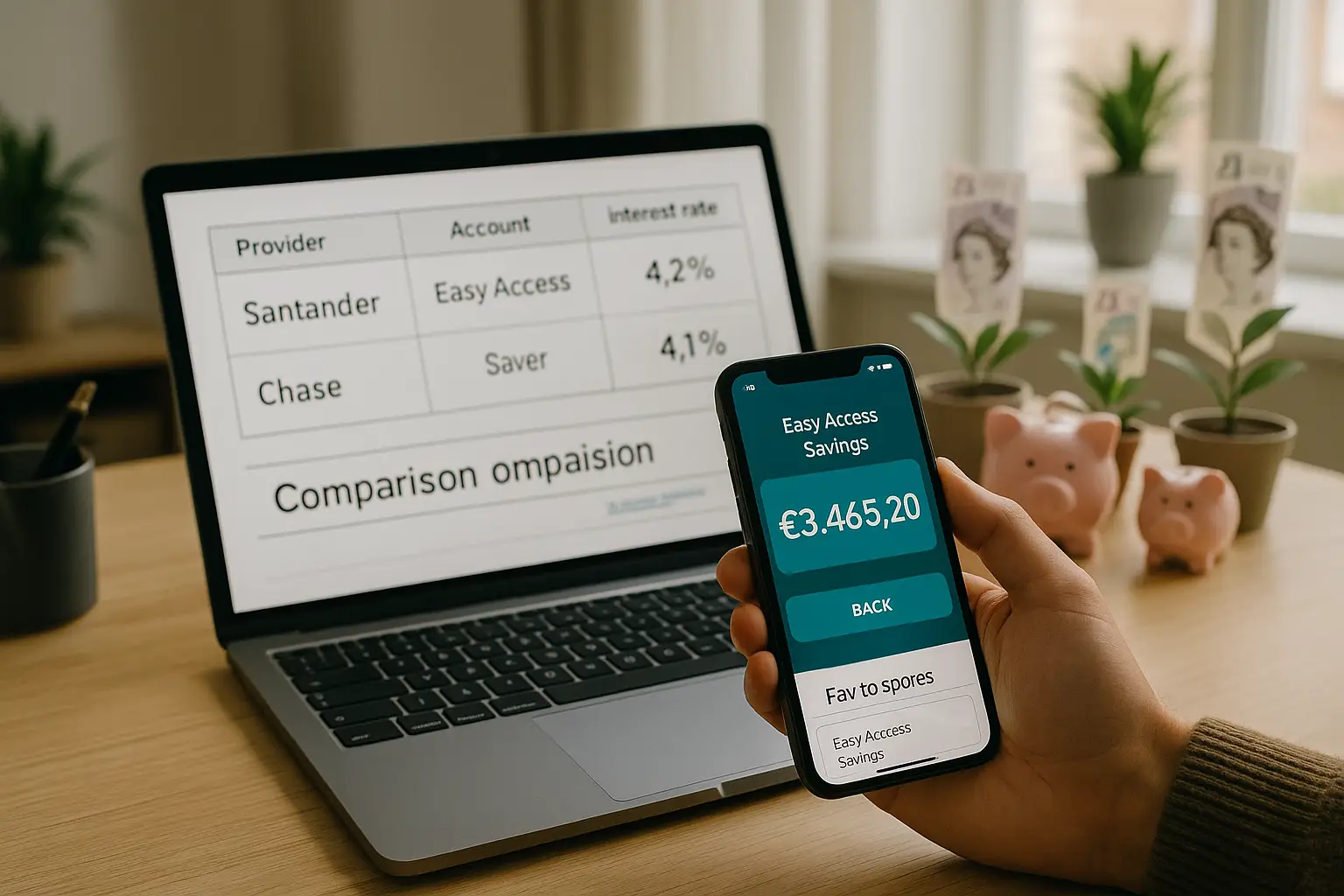
| Provider | AER (%) | Min Deposit | Withdrawal Limits | FSCS Protected |
|---|---|---|---|---|
| Santander | 3.50 | £500 | Unlimited | Yes |
| Chase UK | 3.85 (with bonus) | £0 | Unlimited | Yes |
| Halifax | 2.75 | £1 | Unlimited | Yes |
| Saga | 4.00 | £1 | Unlimited | Yes |
- Focus on variable rates for easy access savings account comparison.
- Check eligibility for bonuses in best easy access savings account UK searches.
- Verify latest data on sites like Moneyfactscompare.co.uk.
Common pitfalls and tips
Avoiding mistakes ensures your easy access savings account works optimally. Stay vigilant on rate changes and tax rules.
Rate drop risks
Variable rates in easy access savings accounts can fall with Bank of England cuts, eroding returns. Monitor via alerts from providers or tools on Moneysupermarket.com. Switch promptly to maintain competitive yields.
Tax on interest
Exceed your PSA, and you’ll owe income tax on excess interest from easy access savings accounts. Track earnings annually; use ISAs for larger sums to avoid this, as per HMRC.
Switching accounts
Switching is simple via the Current Account Switch Service, but check for account closure rules. For the best easy access savings rates, review every six months. Martin Lewis recommends this for maximising martin lewis best easy access savings.
Frequently asked questions
What is an easy access savings account?
An easy access savings account is a flexible savings product that allows instant withdrawals without penalties, earning variable interest on your balance. It’s designed for those needing liquidity alongside growth, differing from fixed-term accounts by avoiding lock-ins. In the UK, these accounts are popular for emergency funds, with rates influenced by market conditions for ongoing accessibility.
How does interest work on easy access accounts?
Interest accrues daily or monthly on the balance in an easy access savings account, quoted as AER to reflect compounding effects. Payments might occur monthly or annually, helping savings grow faster over time. For instance, easy access savings account monthly interest credits add up, but rates can vary, so compare the best rate easy access savings account options regularly.
Are easy access savings accounts safe?
Yes, UK-regulated easy access savings accounts are protected by the FSCS up to £85,000 per person, shielding against provider failure. This scheme, backed by the government, ensures your funds’ security without needing private insurance. Always confirm the provider’s authorisation via the FCA register for complete peace of mind.
What’s the best easy access rate right now?
As of late 2025, top rates for the best easy access savings account reach 4.75% AER, surpassing averages of 3.2%. Providers like Zopa offer these, often with conditions like linked accounts. Rates change frequently, so use comparison sites for the highest interest easy access savings account tailored to your deposit size.
Do I pay tax on easy access savings interest?
You may pay tax on interest from an easy access savings account if it exceeds your Personal Savings Allowance—£1,000 for basic-rate taxpayers. Higher earners have lower thresholds, making ISAs a tax-free alternative for larger savings. Track your total interest across accounts annually to stay within limits and avoid unexpected bills.
What is the best easy access savings account UK for beginners?
For beginners, opt for low-minimum deposit accounts like those from Chase UK or Post Office, offering easy access with competitive rates around 3.5-4%. They provide app-based simplicity and FSCS protection without complex requirements. Start small, build habits, and graduate to higher-yield online easy access savings accounts as confidence grows.
How do joint easy access savings accounts work?
A joint easy access savings account lets two people share ownership, allowing both to deposit and withdraw freely while earning interest on the combined balance. It doubles FSCS protection to £170,000, suiting couples saving for homes or holidays. Ensure both parties agree on terms to avoid disputes, and check provider rules for joint access.